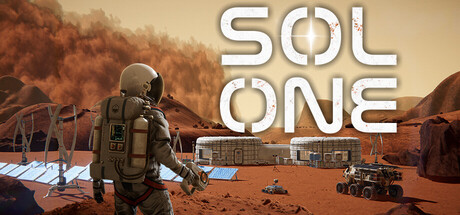
Sol One
A grounded open-world survival crafting game where you're stranded alone on Mars. Explore the red planet, extract resources, build a pressurized base, manage oxygen, power, and food, and construct the rocket that's your only way home.


このゲームについて
You're alone on Mars.
The mission is over. Your crew left you behind. You've got a pressure suit, whatever you can pull out of the ground, and a long way to go before you see Earth again. There's a rocket between you and home. You just have to build it first.
Sol One is a first-person open-world survival game that tries to get the science right. It's for people who like grounded, science-driven survival where the problem-solving is the point. Your oxygen, power, and food all come from machines you set up and maintain, and keeping them running is a must for survival.
Build it up from the dirt
Mine iron, copper, silica, ice, and uranium out of the red planet. Run the raw materials through smelters and fabricators and manufacture the parts you need to turn a cramped shelter into a thriving base. The tech tree gives you a long road from scraping by to running a base that mostly takes care of itself.
A planet that wants you dead
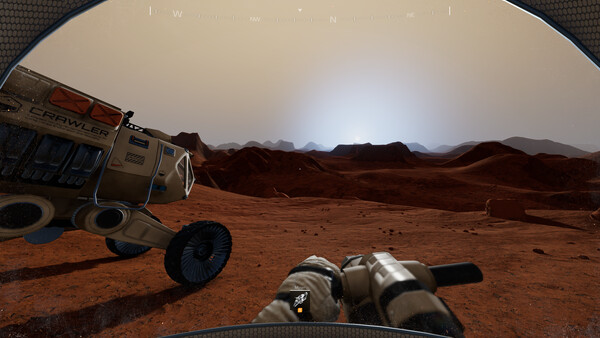
Mars is doing its best to kill you the whole time. The surface runs out to the horizon in every direction, broken up by deep canyons, old craters, mountains, and fields of rock and coarse regolith you have to pick your way across. The sky behaves like the real thing, from rusty daylight to a cold blue sunset to the gorgeous Milky Way after dark. Dust storms brew on the horizon and roll in over the ridge, and your solar panels drop off, visibility closes in, and the comfortable margins you were working with are suddenly gone until it passes.
Beyond the airlock
Drive out across the surface to find what's worth finding, or send your autonomous rover ahead to scout and haul while you handle things back in your base. The planet is dotted with crashed spacecraft, earlier landing sites, and abandoned mission bases, and picking through them turns up materials, parts, and pieces of what happened here before you arrived. Getting somewhere far out and getting back alive is its own kind of problem when your oxygen and power are still ticking down the whole way.
The Only Way Home
All of it points at one goal. Mine enough, learn enough, and build enough to finish a rocket that flies, climb in, and return home.
Features
Connected life support — Oxygen, power, and food all depend on each other, so a failure anywhere is felt everywhere
Three crafting tiers — Extraction, processing, and fabrication, working up from raw regolith to finished parts
Base building — Pressurized, oxygenated habitats running on a power grid you lay out and keep running
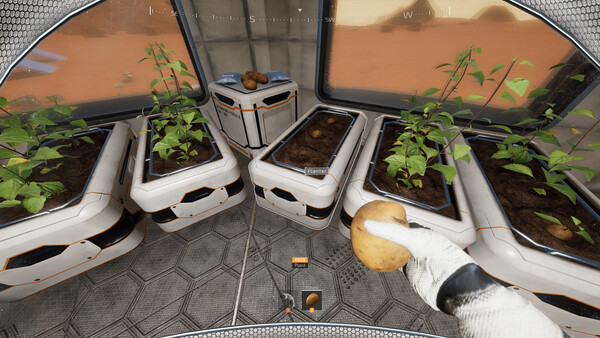
Farming — Grow your own food, and since every crop is also a seed, you're always deciding whether to eat it or plant it
Vehicles and exploration — Drive the surface yourself or send an autonomous rover ahead, and search crashed ships, landing sites, and old mission bases for what they left behind
Dust storms — Storms roll in and take your power and visibility with them, so you're forced to plan around them or get caught out
A full-scale Mars with a physically-based sky and an accurate Martian day/night cycle
About Early Access
I'm building Sol One on my own, and I want to get it right with the people who play it. That's why I'm launching into Early Access instead of holding everything back until it's done. The community's feedback matters a lot to me here — what players run into, what they like, what feels off, and what they want more of is going to steer where the game goes and what I build next. The demo covers the early survival loop, and the full game grows out from there: more systems, a more accurate planet, and the whole arc from crash site to launch. If a slower, more grounded Mars survival game sounds like your kind of thing, wishlist it, jump into the discussions, and help me build it.